
Resources
Custom Injection Molding Robot Supplier for Automation Projects

When evaluating a custom injection molding robot supplier for an automation project, buyers should look beyond the robotic arm itself. A reliable solution must match the molding machine, mold layout, molded part, cycle window and the work that happens after the part leaves the mold. This commercial selection guide explains the engineering inputs to prepare before requesting a custom robot quotation or planning a wider injection molding automation project.
Technical review: KEFAN Automation Engineering Team
Buyer summary
Choose an injection molding robot by matching the machine interface, mold-open window, part and EOAT weight, required strokes, target cycle and downstream task. A 3-axis robot is commonly evaluated for direct take-out and defined placement, while a 5-axis robot supports additional orientation and more complex placement. Side-entry robots suit applications that require lateral access or cycle-sensitive take-out. Before requesting a quotation, provide the IMM model and clamping force, part and mold details, pickup points, placement path, EOAT needs and available installation space. The supplier should confirm the configuration against the complete production sequence, not machine tonnage alone.
Start with the machine and mold interface
Begin with the injection molding machine brand, model and clamping force. The available mold-open stroke, robot entry direction, mounting space and machine interface determine which robot layout is practical. A top-entry robot may suit a machine where the robot enters from above, while a side-entry robot can be considered when the available space or cycle sequence calls for horizontal access.
Share the mold layout, number of cavities, runner arrangement and part release direction with the automation engineer. These details help define the pickup points, robot stroke and the custom EOAT and robot gripper required for stable removal.
Define the part and the robot task
Part dimensions, material, weight and surface requirements affect the gripper concept. The task may include automatic part removal, runner separation, insert loading, inspection, conveying, stacking or packaging. A take-out robot for injection molding should be evaluated as part of the complete sequence, not as an isolated motion unit.
For parts that need controlled orientation or downstream placement, the end-of-arm tooling may combine vacuum cups, mechanical fingers, sensors or custom fixtures. The combined weight of the molded part and EOAT must be included when the required robot load is assessed.
Compare robot configurations for injection molding
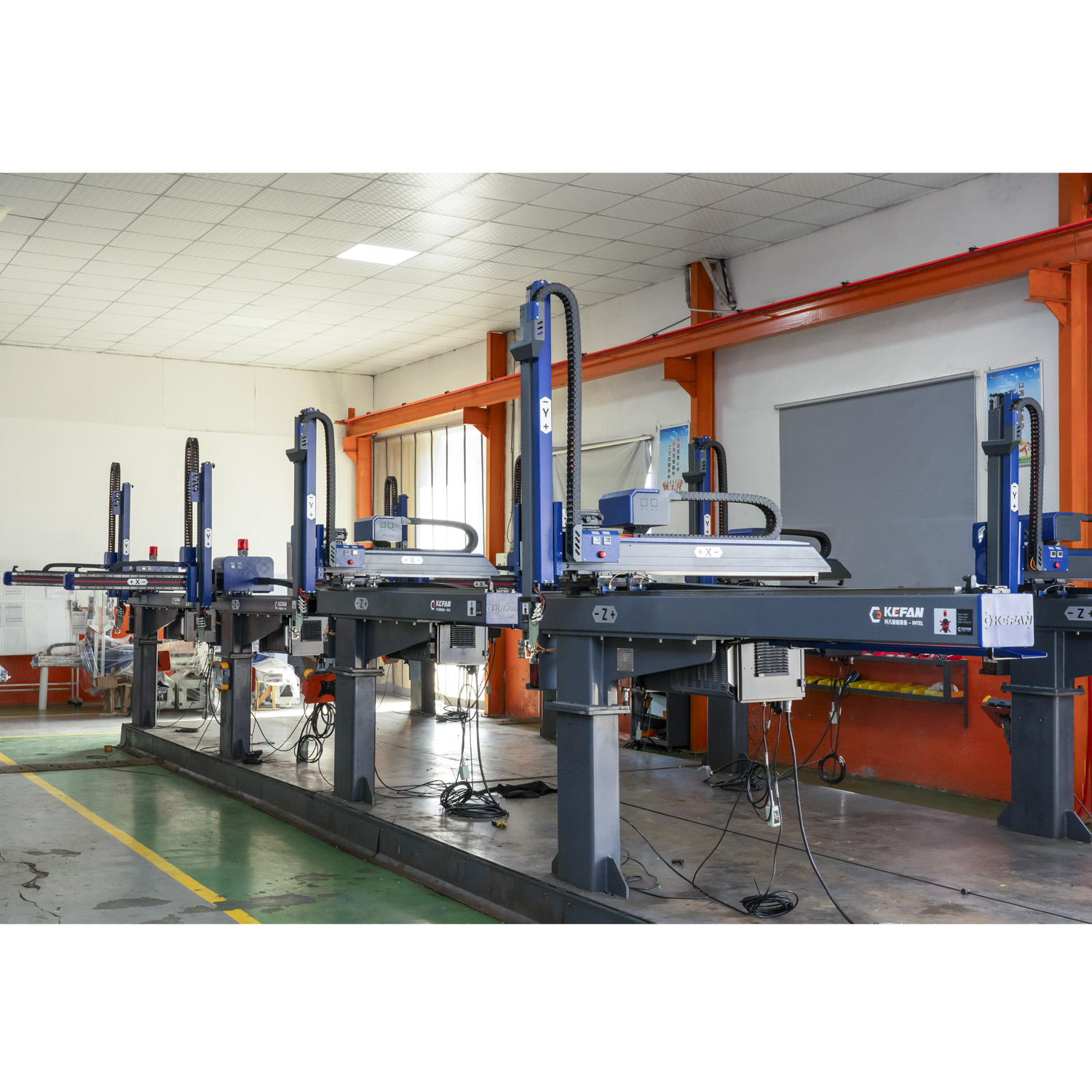
A 3-axis robot is commonly evaluated for direct take-out and defined placement. A 5-axis robot supports applications that need additional orientation or a more complex placement path. Side-entry robots may suit lateral access or cycle-sensitive take-out. The decision should be based on the machine interface, mold-open window, combined part and EOAT weight, required strokes, target cycle and downstream task.
For a detailed selection matrix and representative KEFAN models, read the 3-axis vs 5-axis injection molding robot supplier guide. You can also compare the broader injection molding robot range before requesting a project-specific recommendation.
Plan the complete injection molding automation cell
Many projects start with take-out but later require more of the production flow to be connected. The automation plan may include conveyors, counting, stacking, tray loading, inspection, insert handling, guarding and machine communication. Connecting these elements early helps avoid a robot that can remove the part but cannot deliver the required production flow.
For broader integration requirements, review KEFAN’s injection molding automation solutions. The robot, EOAT and downstream equipment should be planned around one confirmed sequence, including handshakes, placement positions and the expected operator interaction.
Information to include in a custom robot inquiry
- Injection molding machine brand, model, clamping force and interface
- Part drawing, dimensions, material and approximate weight
- Mold layout, cavities, runner and release direction
- Target cycle time and available mold-open window
- Pickup points, required strokes and placement position
- Combined part and EOAT weight
- Floor-space, mounting and guarding constraints
- Insert loading, inspection, conveyor, stacking or packaging requirements
Providing these details allows the engineering team to recommend a practical robot architecture and identify questions that need to be confirmed before quotation.
Frequently asked questions
What is an injection molding robot?
An injection molding robot is an automated handling system used to remove molded parts or runners from an injection molding machine and transfer them to a defined next step. Depending on the application, it can also support inserts, inspection, orientation, conveying, stacking or packaging.
How do I choose a robot for an injection molding machine?
Match the robot to the machine interface, mold-open window, part weight and dimensions, pickup points, required stroke, placement path and downstream task. A supplier should review the part, mold and process rather than recommending a configuration from machine tonnage alone.
Can a robot be combined with other automation?
Yes. A robot can be planned together with custom EOAT, conveyors, inspection, counting, stacking or packaging equipment. The interface and sequence should be defined before the final design is confirmed.
Discuss your application with KEFAN
Send your machine model, clamping force, part information and target cycle window to the KEFAN engineering team. We can review the handling task and recommend a suitable injection molding robot, EOAT concept or complete automation path.