
Custom EOAT Grippers for Injection Molding Robots
KEFAN is a custom EOAT gripper manufacturer for injection molding robots. We design vacuum, mechanical and sensor-equipped end-of-arm tooling for secure part take-out, insert loading, runner handling and downstream placement. Send product drawings, mold photos, part weights and robot interface details for an EOAT review and quotation.
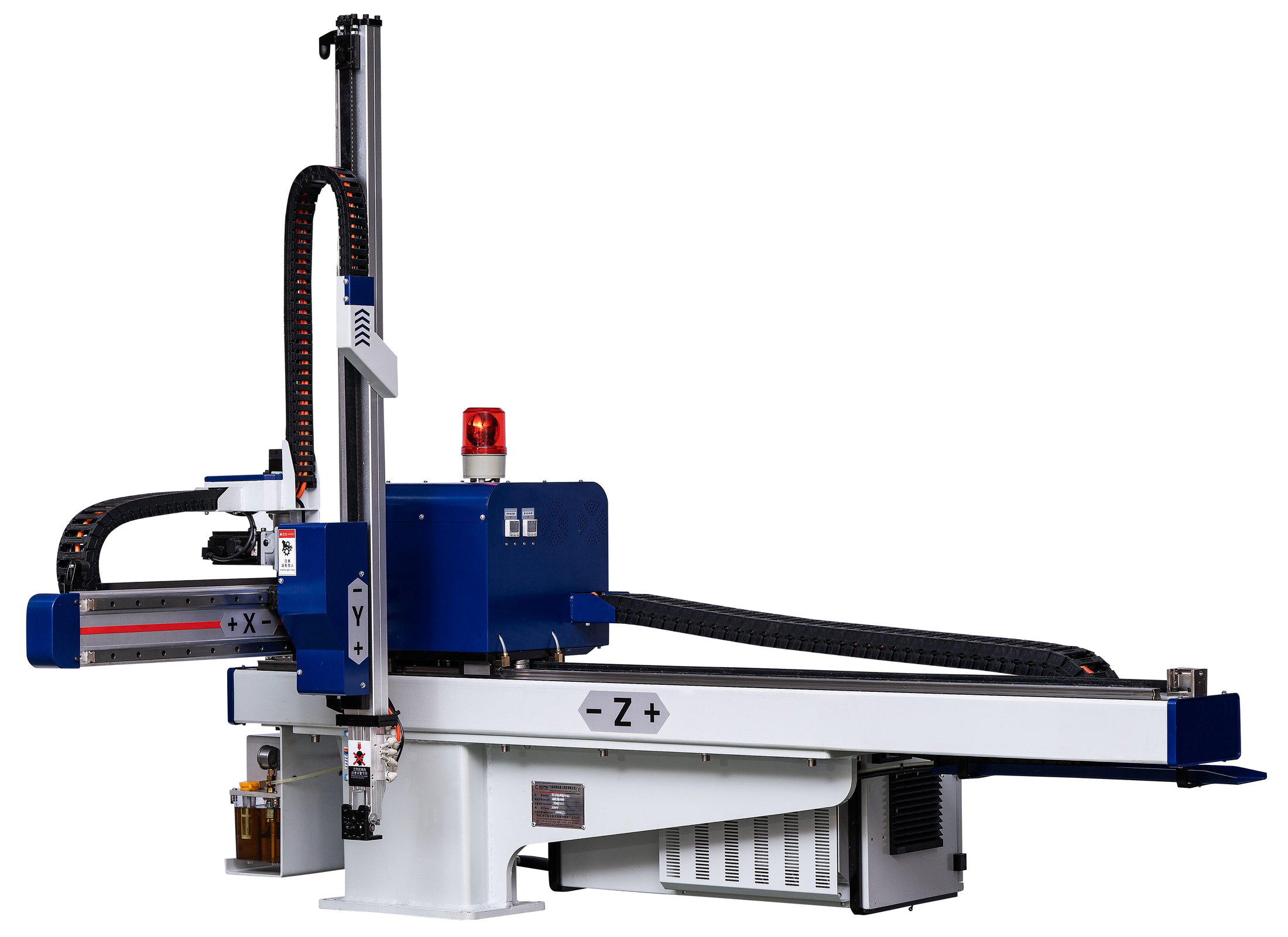
Robot performance depends on the right EOAT gripper
EOAT must hold the part securely, fit the mold space, stay within payload limits and confirm every pickup before the robot leaves the mold area. Match the tooling to the reach, payload and motion of your injection molding robot.
Vacuum Pickup
Cups, generators and circuits selected for surface, material and holding needs.
Mechanical Gripping
Fingers, clamps and sprue grippers for defined grip points.
Part Detection
Sensors confirm pickup, runner presence or insert status.
Multi-Function Tooling
Combine part take-out, insert loading, runner handling and orientation.
Custom EOAT gripper components for each product
Frame Structure
Lightweight profiles and brackets arranged to fit the mold and product geometry.
Vacuum System
Suction cups, fittings, tubing and circuits matched to the pickup surfaces.
Gripping Components
Pneumatic or mechanical gripping elements for runners, inserts and product features.
Sensor Package
Presence and position feedback used to protect the handling sequence.
Robot Interface
Mounting plate, pneumatic lines, electrical connections and payload alignment.
Quick Change Options
Tool-change concepts for cells that run different molds and products.
What we need to engineer the tooling
Accurate mold and product information helps us confirm grip points, clearance, weight and the required detection logic.
- 3D product data or dimensioned drawings
- Mold photos, cavity layout and open-mold clearance
- Part, runner and insert weights
- Acceptable vacuum and mechanical grip locations
- Required release position and product orientation
- Robot model, wrist interface and available payload
EOAT Review Checklist
Tooling for simple take-out and multi-step handling
Part + Runner
Handle the finished part and runner separately in one robot cycle.
Multi-Cavity Parts
Pick several products at once while maintaining cavity orientation.
Insert Loading
Place inserts, confirm presence and remove the molded product.
Large Molded Parts
Distribute support points to control deflection and maintain stable handling.
Cosmetic Surfaces
Select contact areas and materials to reduce marking risk.
Downstream Placement
Orient parts for fixtures, conveyors, inspection, stacking or packing.
From product data to tested handling
Review Data
Check drawings, mold space, grip surfaces and handling sequence.
Define Concept
Select frame, cups, grippers, sensors and interfaces.
Build & Check
Assemble the tooling and verify functions and routing.
Integrate
Coordinate robot motion, signals and release positions.
Reliable handling starts at the contact point
A generic gripper may add weight, miss the best pickup location or fail to confirm the part. Application-specific tooling reduces these compromises. For complete cells, KEFAN can coordinate the tooling with injection molding automation solutions and validate the handling approach through relevant automation case studies.
- Designed for the actual product and mold space
- Balanced around robot payload and center of gravity
- Integrated sensing for a controlled sequence
- Serviceable pneumatic and electrical routing
Frequently Asked Questions
Can you design EOAT for another robot brand?
Compatibility can be reviewed from the robot wrist interface, payload, signals and application data.
Can one tool handle both parts and runners?
Yes, when space, payload and the release sequence allow separate gripping functions.
Can EOAT load inserts?
Yes. Insert pickup, positioning, sensing and mold clearance must be reviewed as a complete process.
How do you confirm a successful pickup?
Vacuum switches, proximity sensors or other detection methods can be selected for the application.
Do you provide exact pricing from a photo?
A photo helps, but accurate quotation normally requires dimensions, weights, mold layout, robot interface and the required sequence.
Need EOAT for a new mold or robot?
Send product data, mold photos, weights and the required sequence for an engineering review.