
Custom Automation for Injection Molding
As a custom automation integrator, KEFAN combines robot motion, custom tooling, fixtures, inspection and downstream equipment into an injection molding production cell built around your product and process.
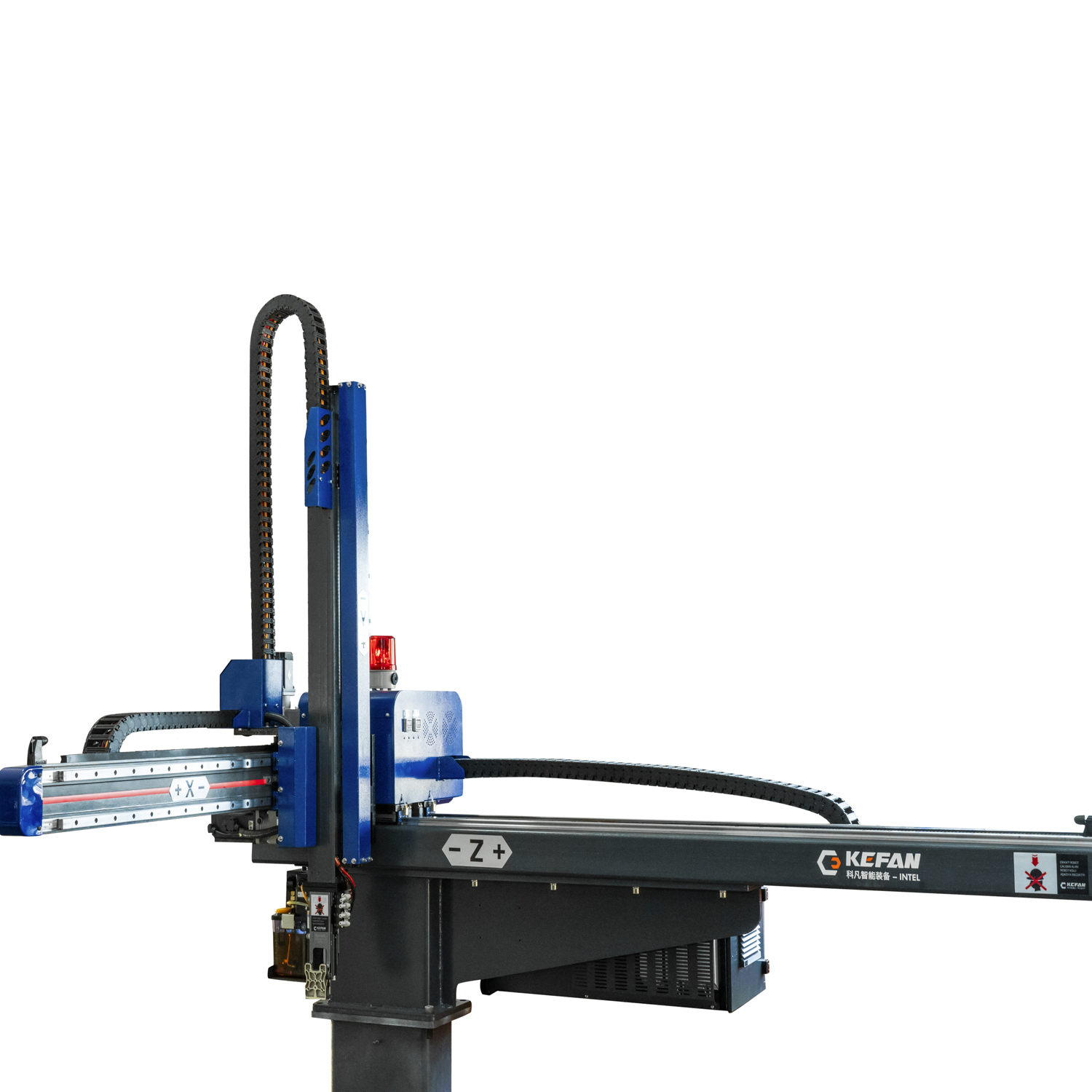
Automate the constraint that limits production
A custom system should solve a measurable process problem, such as difficult handling, unsafe access, inconsistent quality, labor dependence or an unconnected downstream step.
Complex Sequence
Multiple motions, products, fixtures or process steps must stay synchronized.
Insert Molding
Inserts require loading, position confirmation and finished-part removal.
Quality Control
Presence, orientation or defined features must be checked before release.
Downstream Bottleneck
Trimming, stacking, packing or manual transfer limits the full molding cycle.
Build the cell from proven functional modules
The final system combines only the operations needed to achieve the production objective.
Multi-Function EOAT
Take out parts and runners, load inserts, reorient products and verify pickup.
Positioning Fixtures
Locate products or inserts accurately for transfer, inspection or assembly.
Degating & Trimming
Connect molded-part handling with application-specific cutting or separation.
Inspection & Sorting
Check defined characteristics and route products according to the result.
Conveying & Stacking
Transfer, count and arrange parts for collection or the next process.
Packaging Integration
Connect molded products to bagging, tray loading or case-packing operations.
Cell Coordination
Manage handshakes, recipes, sensors, alarms and peripheral sequences.
Guarding & Interlocks
Define safe access, operating zones and stop conditions around the cell.
Production Signals
Provide practical status, count or fault information where required by scope.
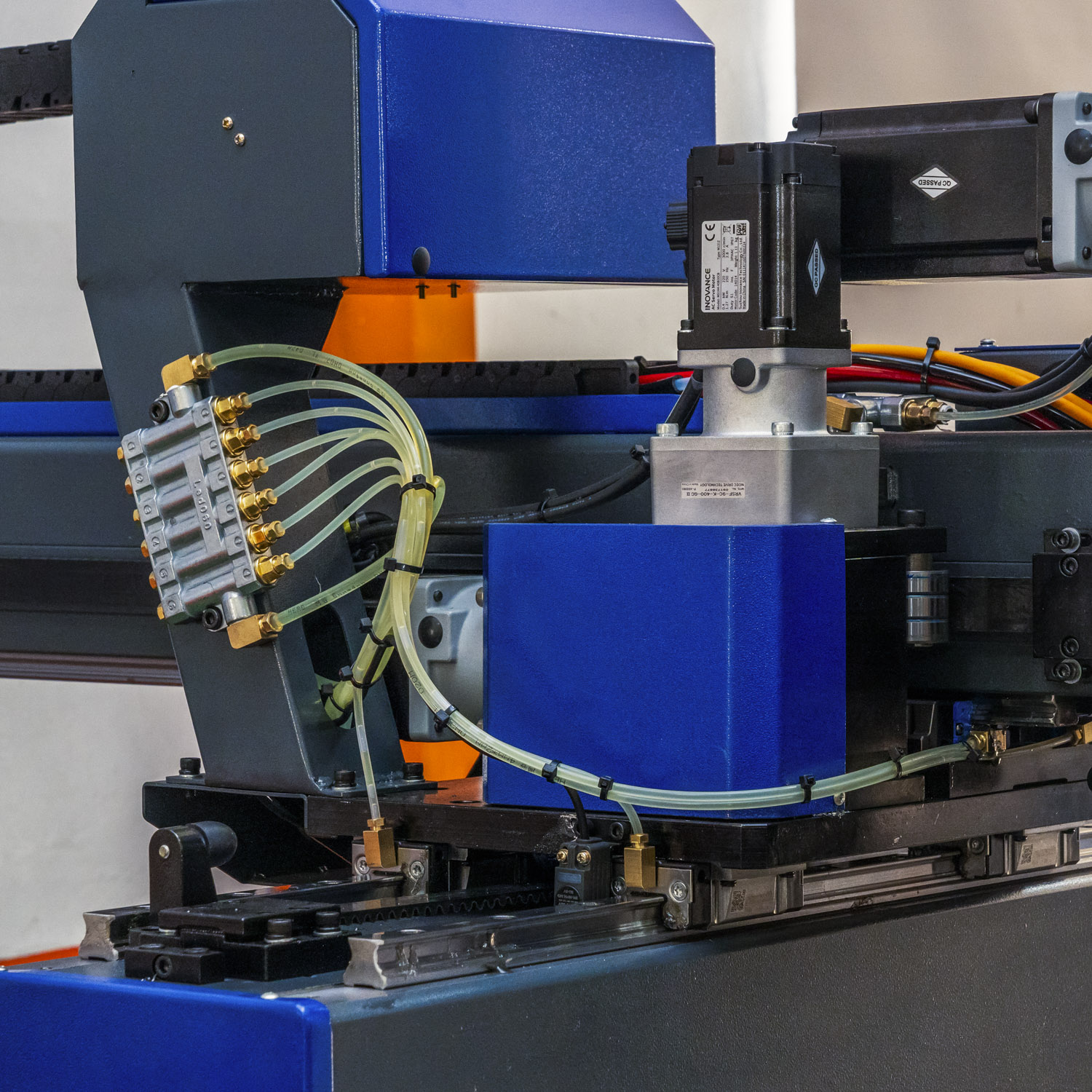
Design every interface before building hardware
A custom cell becomes reliable when mechanical, electrical, pneumatic, control and safety interfaces are confirmed together.
- Machine and robot communication
- EOAT payload, services and sensing
- Product flow and reject handling
- Peripheral timing and recovery logic
- Operator access, changeover and maintenance
What we need for a workable concept
Clear technical information early in the project reduces assumptions, change requests and commissioning delays.
- Injection molding machine, mold and interface information
- Product drawings, weights and acceptable contact areas
- Current manual process or target automation sequence
- Cycle time, takt time and production-volume expectations
- Inspection criteria and acceptable reject handling
- Available floor space, utilities and customer standards
Define the Acceptance Target
A gated process keeps the project controlled
Each stage confirms the information needed before the next stage begins.
Requirement Study
Clarify the problem, process, products, cycle and site constraints.
Concept & Layout
Define operations, equipment, sequence and preliminary cell layout.
Technical Agreement
Confirm scope, interfaces, acceptance criteria and responsibilities.
Detailed Engineering
Complete mechanical, electrical, pneumatic and control design.
Build & Integrate
Manufacture tooling and fixtures, assemble equipment and program the cell.
Test & Review
Check functions and sequence against agreed input conditions.
Delivery & Installation
Prepare shipment and support site setup and commissioning.
Production Support
Provide operating guidance and support agreed project needs.
Control risk before it reaches the factory floor
Scope Freeze
Products, operations, interfaces and exclusions are documented before detailed design.
Design Review
Layout, access, handling concept and customer interfaces are confirmed.
Test Readiness
Samples, molds, inserts, utilities and test conditions are available.
Functional Test
The cell sequence is checked against the agreed acceptance plan.
Site Readiness
Space, power, air, machine signals and installation conditions are prepared.
Handover
Documentation, open items and support responsibilities are recorded.
Practical engineering around the molding cell
Our focus is not adding complexity. It is connecting the robot, tooling and necessary downstream functions into a system the production team can operate and maintain. Start with our injection molding automation solutions, review custom EOAT grippers, and see relevant robot automation case studies.
- Injection molding automation as the project foundation
- Robot, EOAT, fixtures and peripherals planned together
- Scope and interface definition before detailed engineering
- Support from application review through production use
Frequently Asked Questions
What makes a project “custom automation”?
It typically combines application-specific tooling, fixtures, downstream equipment, controls or inspection beyond straightforward robot take-out.
Can you automate an existing molding cell?
Often yes, but machine signals, space, guarding, mold access and current equipment must be reviewed.
How do you quote a custom system?
Quotation follows the agreed process scope, products, cycle, interfaces, testing conditions and delivery responsibilities.
Can you guarantee cycle time from preliminary information?
Reliable cycle commitments require confirmed travel, payload, mold timing, samples and downstream operations. Preliminary estimates should not be treated as final acceptance values.
How are changes handled after approval?
Changes to products, functions, interfaces or acceptance criteria should be reviewed for technical, cost and schedule impact before implementation.
What should the customer prepare for testing?
Agreed machines or interfaces, production-representative samples, molds, inserts, utilities and acceptance conditions are normally required.
Have a molding process that standard equipment cannot solve?
Send the current process, product data, target cycle and required operations for a structured project review.