
Resources
Custom Injection Molding Robot Supplier: Project RFQ Guide

When evaluating a custom injection molding robot supplier for an automation project, buyers should look beyond the robot arm itself. The supplier must understand the injection molding machine, mold layout, molded part, cycle window, machine interface and the work that happens after part removal. This page explains how to assess a supplier and prepare a project-ready request for quotation.
Commercial focus: supplier evaluation, application engineering and custom injection molding automation.
Technical selection reference: For the step-by-step machine, mold, payload, stroke and cycle-time checklist, read the how to choose an injection molding robot guide first, then return here to evaluate supplier scope and quotation readiness.
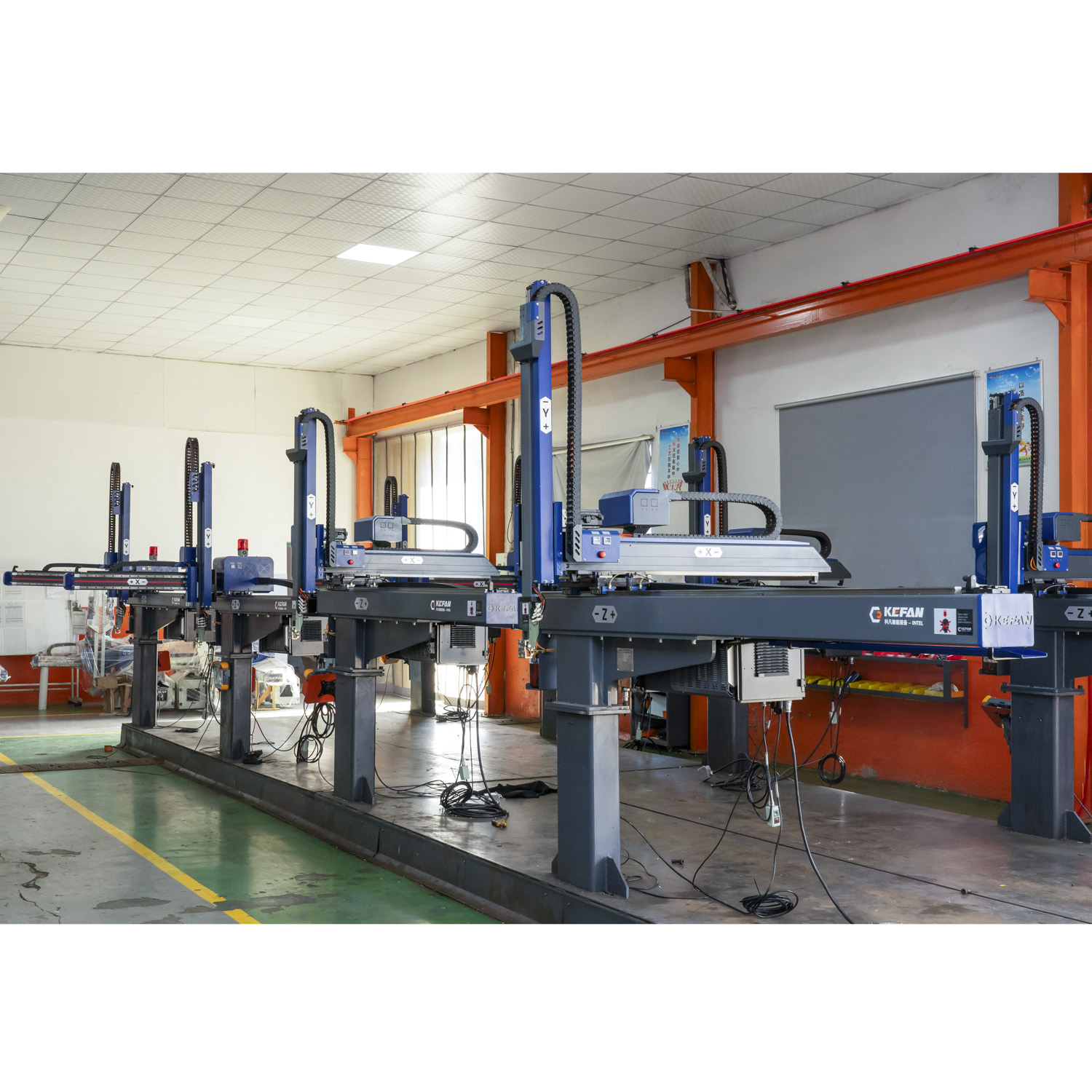
What a capable injection molding robot supplier should review
A reliable supplier should review the complete handling sequence before recommending a model. That review normally covers the machine brand and model, clamping force, mold-open window, tie-bar and platen layout, part and runner details, required take-out direction, EOAT concept, placement position and the downstream process.
This is different from choosing a robot from machine tonnage alone. Tonnage is an input, but it does not define the required stroke, payload, gripping method, clearance or communication signals. The supplier should explain which assumptions are confirmed, which inputs are missing and which design decisions still need validation.
Supplier evaluation checklist for an automation project
Application engineering before quotation
Ask whether the supplier can review a part drawing, mold layout, machine interface and target cycle before issuing a quotation. The review should identify the robot entry direction, pickup points, required strokes, combined part and EOAT weight, placement path and operator access. A clear engineering review reduces the risk of selecting a configuration that cannot clear the mold or complete the sequence.
Robot, EOAT and machine interface as one system
The robot is only one part of the cell. The supplier should define how the robot, custom EOAT, injection molding machine and downstream equipment exchange signals. Depending on the application, the scope may include vacuum cups, mechanical fingers, sensors, runner separation, conveyor transfer, counting, stacking, inspection, insert loading or packaging.
For part-specific tooling, review the custom EOAT and robot gripper options. The tooling concept should account for part geometry, surface protection, temperature, release direction and the combined payload carried every cycle.
Integration and safety scope
Confirm what is included in the project scope: robot controller, machine interface, guarding, safety circuits, conveyors, installation support, commissioning and operator training. For a wider production flow, compare the supplier’s injection molding automation solutions and ask for a sequence description that covers handshakes, placement positions and operator interaction.
What to include in a custom robot RFQ
Send the following information when requesting a project review. You do not need every item to start a conversation, but the more complete the input, the more precise the first recommendation can be.
- Injection molding machine brand, model, clamping force and interface
- Mold dimensions, cavities, runner arrangement and part release direction
- Part drawing or photos, material, dimensions, weight and surface requirements
- Target cycle time and available mold-open window
- Required take-out direction, pickup points, strokes and placement position
- Estimated EOAT weight and preferred gripping method, if known
- Available mounting, floor-space and guarding constraints
- Downstream needs such as conveyor, inspection, stacking, packaging or insert loading
With these inputs, the engineering team can confirm whether a standard linear robot, a different robot configuration, custom EOAT or a broader automation cell is appropriate.
How KEFAN supports project-based selection
KEFAN focuses on injection molding robots, linear servo robots, custom EOAT and automation solutions for plastic part handling. Our project discussion starts with the machine, mold and part data, then maps the required robot motion and downstream sequence. Where a standard robot is sufficient, the scope stays focused. Where the process requires additional handling, the robot can be planned with the rest of the cell.
Explore the injection molding robot range for the main product families. For applications that require orientation or a more complex placement path, compare the 3-axis and 5-axis robot configurations after the project inputs have been reviewed.
Questions to ask before appointing a supplier
Can the supplier recommend a robot from our machine and part data?
Yes. A useful recommendation should be based on the machine interface, mold layout, part and runner weight, EOAT, cycle window, stroke, placement path and installation constraints. It should also state any information that still needs confirmation.
Can the same supplier handle custom EOAT and downstream automation?
Ask the supplier to define the boundary between the robot, tooling and downstream equipment. A coordinated scope can reduce interface work when the project includes conveyors, inspection, stacking, packaging or insert handling.
What should be included in the quotation?
Request the proposed robot configuration, payload and stroke assumptions, EOAT concept, machine interface, safety and guarding scope, downstream equipment, commissioning responsibilities, documentation and the information required for final design approval.
Discuss your application with KEFAN
Send your machine model, clamping force, part information, mold details and target cycle window to the KEFAN engineering team. We can review the handling task and recommend a suitable injection molding robot, EOAT concept or complete automation path.